Former U.S. President Donald Trump has made another bold statement — calling people who oppose tariffs “fools” while announcing a plan to issue a $2,000 dividend to every American. According to Trump, the U.S. is earning trillions of dollars from tariffs imposed on imports, and the funds will soon be used to reduce the national debt and provide direct financial benefits to citizens.
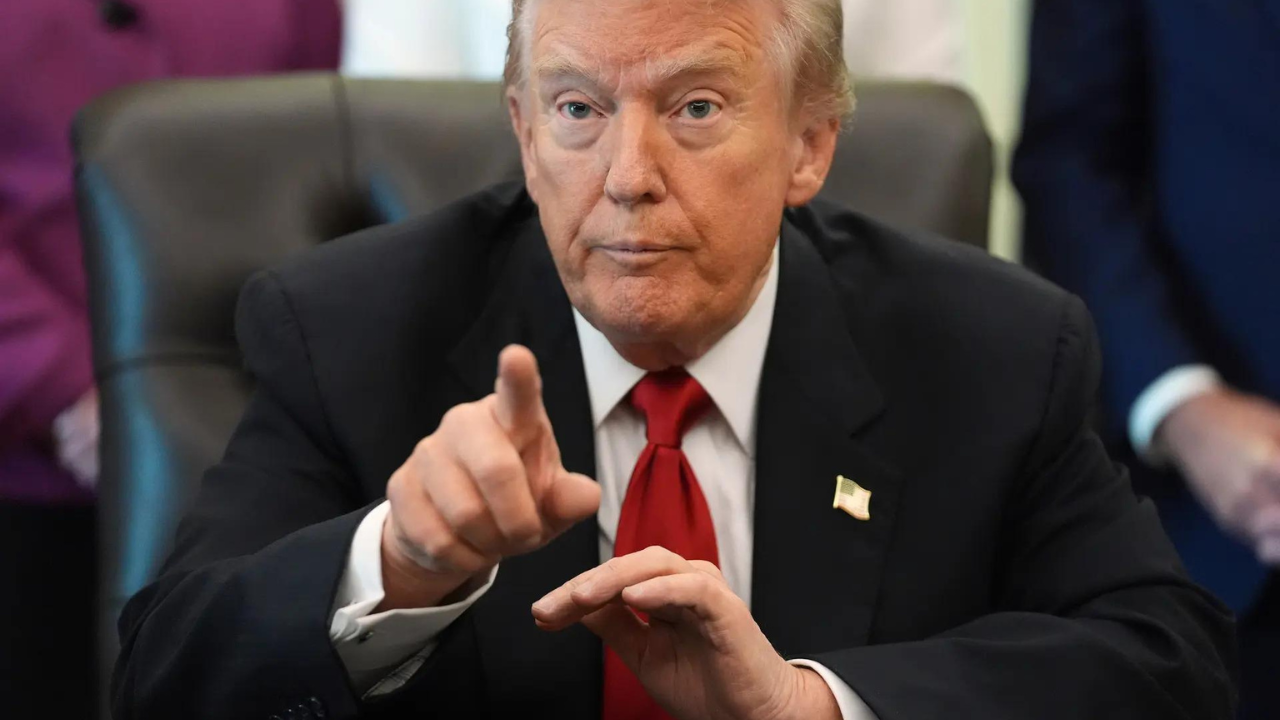
The statement, made during a recent campaign event, has quickly become a major talking point in both political and economic circles. It marks Trump’s latest attempt to highlight his “America First” trade policy, which he claims is finally paying off for the country.
Trump’s Big Claim: Tariffs Are Making America Rich
During his speech, Trump said that the U.S. is collecting massive revenue from tariffs placed on imported goods, especially from countries like China. He described tariffs as a powerful tool that not only strengthens the American economy but also ensures that other nations “pay their fair share.”
He went on to say,
“We are taking in trillions and trillions of dollars through tariffs. People who oppose them are fools. This money is coming straight into our Treasury, and we are going to use it to make America stronger.”
Trump has long argued that tariffs — essentially taxes on imported goods — help protect American industries and jobs. His administration previously used this strategy to reduce trade deficits and encourage companies to manufacture within the U.S.
The $2,000 Dividend Promise
The biggest headline from Trump’s statement is his announcement of a $2,000 dividend that would be distributed to all Americans.
According to Trump, the revenue collected from tariffs is so large that the government can now afford to give back to the people.
“Every American deserves to benefit from this economic success. We’re going to give a $2,000 dividend to our citizens — money that came from other countries, not from your taxes.”
If implemented, this could mean hundreds of billions of dollars being returned to American households. However, economic experts are questioning how feasible this plan really is, considering the complexity of tariff collection and budget management.
proclassifiedads.com | onestheater.com | iscbrm.org
my-lifeplus.net | hoopladigitall.com
Reducing the $37 Trillion National Debt
Another key part of Trump’s speech focused on America’s massive national debt, which has now crossed $37 trillion.
Trump claimed that the income generated through tariffs would not only fund the $2,000 dividend but also help pay down the national debt. He said the administration’s next move would be to start reducing the debt using the surplus from tariff revenues.
“We are finally in a position to pay off this debt. For the first time in decades, we are taking in real money — not just printing it. Tariffs are saving our country.”
Critics, however, argue that tariffs alone cannot cover the scale of U.S. debt. According to the U.S. Treasury Department, total annual tariff revenue is far less than the trillions required to make a major dent in the debt. Still, Trump’s supporters believe that his strong trade stance could improve America’s financial health over time.
A Revival of “America First”
Trump’s new announcement is part of a broader effort to revive his “America First” message ahead of future elections.
His approach focuses on economic nationalism, emphasizing that foreign nations should pay more for access to U.S. markets while American workers and companies get priority.
He claimed that his trade strategy has:
-
Created millions of American jobs,
-
Increased domestic manufacturing, and
-
Made the U.S. less dependent on other nations.
-
“The globalists never wanted this. But look what’s happening — the money is flowing in, the factories are reopening, and Americans are winning again.”
This statement aligns with Trump’s earlier positions, where he often said tariffs were “a beautiful thing” that put America back in control of global trade.
Critics Call It “Economic Fiction”
Economists and policy analysts, however, have a very different view.
Many experts argue that tariffs are not paid by foreign governments, but by importers and consumers within the U.S. This means higher prices for goods, inflationary pressure, and potential strain on small businesses.
Dr. Emily Richards, an economics professor at Yale, commented:
“Tariffs can raise revenue, but not to the extent Trump claims. The idea that they could fund a $2,000 dividend and pay down national debt is unrealistic. Much of the cost is passed on to American consumers.”
Some analysts also warned that retaliatory tariffs from other countries could hurt U.S. exports, especially in agriculture and manufacturing sectors, leading to job losses instead of gains.
Despite this, Trump’s loyal base views tariffs as a symbol of economic independence, supporting his stance that the U.S. should no longer be “taken advantage of” by other countries.
What Americans Think About the Dividend
The idea of a $2,000 payment per person has generated huge excitement online. Social media platforms like X (formerly Twitter) and Reddit are filled with discussions about whether the plan could really happen.
Many users expressed support, saying that any financial relief would be welcome, especially amid rising living costs. Others, however, remain skeptical, questioning how sustainable the plan would be.
“It sounds good, but where’s the math? Tariffs can’t fund everything,” one Reddit user wrote.
“Still, $2,000 in every American’s pocket — that’s something most people won’t say no to,” another commented.
For Trump’s supporters, the promise symbolizes economic empowerment, while critics see it as a campaign tactic designed to gain attention ahead of future elections.
Political Impact and Global Response
Trump’s announcement also drew international reactions. Some foreign governments, particularly China and European Union officials, criticized the statement as “misleading,” arguing that global trade shouldn’t be used for political promises.
If Trump were to return to office and follow through on his tariff expansion plans, it could potentially reignite trade tensions worldwide. Economists warn that such moves might impact supply chains, raise global prices, and trigger new rounds of tariff wars.
Nonetheless, Trump insists his goal is not confrontation but fairness.
“We’re not trying to start wars. We’re trying to stop being ripped off. America should never lose in trade again.”
Conclusion
Donald Trump’s declaration that “people against tariffs are fools” and his promise of a $2,000 dividend for Americans have once again put him in the spotlight. Whether this plan is economically realistic or politically strategic, it reinforces Trump’s image as a leader who prioritizes American interests above all.
While experts remain divided on the practicality of funding both debt reduction and citizen dividends through tariff revenue, one thing is certain — Trump’s bold economic rhetoric continues to capture public attention and reshape political debate.
As the discussion unfolds, Americans are left wondering:
Will tariffs truly make the country richer — or will they come at a cost?