Season 3 of The Family Man marks the return of one of India’s most loved web series, but this time the narrative takes a refreshing shift. While the show has always balanced humor, action, and emotional depth, the new season moves closer to the core of what it has hinted at since the beginning — that the biggest battles are often fought at home, not in the field.
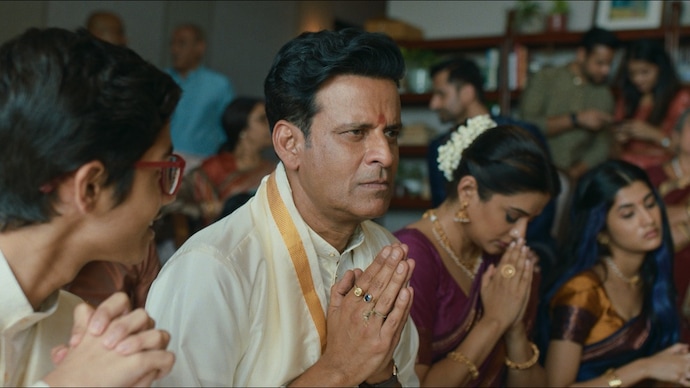
The show continues to follow Srikant Tiwari, a middle-class man juggling a high-pressure job as an intelligence officer with the Threat Analysis and Surveillance Cell (TASC) and an equally demanding family life. But in Season 3, the spotlight shines more intensely on the “family man” aspect of his dual identity. The creators draw attention to an increasingly relatable theme: modern Indian families are messy, complicated, and layered — and even a top spy cannot escape these everyday challenges.
A More Personal Season Than Ever Before
In the past seasons, Srikant’s struggles at home were often used as comic relief or emotional anchors amid high-tension missions. His wife Suchitra’s frustration, the children’s irritation, and Srikant’s inability to maintain work-life balance were important but secondary.
Season 3 changes the equation.
This time, the family drama is not a side plot.
It becomes the emotional centre of the show.
The creators dive deeper into the Tiwari household, showing how unresolved issues, misunderstandings, and emotional distance can build up over time. Srikant’s demanding job leaves him with little mental space, while his family continues to feel the consequences of his secrecy and long absences.
Suchitra, who has always felt lonely in her marriage, confronts her own confusion and complicated relationship dynamics. Their children, Dhriti and Atharv, are growing up, becoming more independent, and developing their own struggles and opinions about their parents. The season beautifully captures the disconnect that can happen in urban families when communication stops, and emotional needs go unheard.
shoppingnearstore.com | HomeSpheres.com | buythismore.com
newautotrends.com | letsplaysgame.com
Modern Indian Family Problems: Real and Relatable
Season 3 reflects what many Indian households face today — pressure, silence, mistrust, and emotional fatigue.
We see:
-
Parents trying but failing to understand their teenagers
-
Spouses who love each other but struggle to communicate
-
A home filled with affection but also distance
-
Children adapting to independence in a digital world
-
A father who wants to be present but is consumed by work
What makes it powerful is that none of these issues feel exaggerated or dramatic. They are raw, subtle, and uncomfortably familiar.
The show highlights how difficult it can be to maintain relationships while navigating modern careers, stress, and ambitions. Unlike typical thrillers that glorify the hero’s sacrifices, The Family Man 3 highlights the cost of those sacrifices on everyone involved.
Espionage Still Thrilling, but Secondary
While the emotional landscape takes prominence, Season 3 does not abandon its spy-thriller roots. In fact, the espionage plot remains gripping, grounded in political complexity, high-stakes operations, and strategic intelligence work.
However, the difference is in how the suspense is woven in.
Instead of taking over the story, the thriller elements now run parallel to Srikant’s family journey.
The missions are intense, dangerous, and relevant, but Srikant’s personal life influences his performance more than before. His exhaustion, guilt, and emotional conflicts make him more vulnerable, more human, and more real.
The stakes are higher because they affect two fronts — the nation and the home.
Srikant Tiwari: The Most Human Hero Yet
One of the biggest strengths of Season 3 is how it reshapes the idea of a hero.
Srikant is not portrayed as someone who can balance everything flawlessly.
He is:
-
Tired
-
Emotionally strained
-
Struggling to be a good father
-
Trying to fix his marriage
-
Fighting terrorists while fighting personal battles
-
Unsure of how to keep everyone happy
This makes him one of the most relatable male characters in Indian storytelling — flawed yet trying, imperfect yet sincere. His conversations with his children, his attempts to reconnect with Suchi, and his inner turmoil add layers rarely seen in conventional thrillers.
The Emotional Payoff: Growth Over Heroism
Instead of glorifying last-minute action scenes or showcasing explosions, Season 3 focuses on emotional growth. Characters evolve, relationships shift, and the story explores what it truly means to be responsible — not as a spy, but as a human being.
Viewers see:
-
Srikant learning to listen
-
Suchitra finding her voice
-
Dhriti navigating teenage freedom with responsibility
-
Atharv developing empathy
-
The family learning to see each other beyond frustration
This evolution is more satisfying than any twist or plot reveal.
A Stronger Message for Today’s Audience
In a world where work pressure, screen addiction, and emotional distance define many Indian households, The Family Man 3 delivers an important message:
Being there for your family is harder than any mission — and more important than any victory.
The show does not preach or dramatize.
It simply shows the truth:
Modern families are not broken; they are overwhelmed.
The season becomes a reminder to:
-
Talk
-
Listen
-
Spend real time together
-
Understand instead of assuming
-
Support instead of criticizing
-
Value relationships before it’s too late
This emotional honesty is what makes Season 3 stand out.
Balancing Action and Emotion
Even though the emotional core is strong, the season still excels in its action sequences:
-
Covert missions
-
Geo-political threats
-
Unexpected betrayals
-
High-adrenaline chases
-
Smart intelligence work
The difference is that every action scene now feels more meaningful because it connects directly to Srikant’s personal struggle.
This balance is what makes The Family Man 3 one of the most unique seasons yet.
Why This Season Works So Well
Season 3 succeeds because it dares to be unconventional. Instead of repeating what worked earlier, the creators take a bold step toward deeper storytelling.
It works because:
-
It feels real
-
It blends emotion with tension
-
It reflects modern Indian life
-
It humanizes its hero
-
It acknowledges that family conflicts are universal
-
It gives equal space to relationships and missions
-
It grows with its audience
The new season proves that thrillers do not always need to depend solely on explosions or dramatic twists. Sometimes, the most powerful storylines come from quiet moments, honest conversations, and emotional truths.