Political debates in India often witness sharp exchanges, and the latest tension between Prime Minister Narendra Modi and Congress leader Priyanka Gandhi Vadra is another example of how heated the atmosphere can become inside and outside Parliament. The exchange began when Prime Minister Modi commented that Parliament needs “delivery, not drama.” In response, Priyanka Gandhi Vadra hit back, saying that raising serious public issues like Delhi’s air pollution and the Special Intensive Revision (SIR) of electoral rolls can never be considered “drama.”
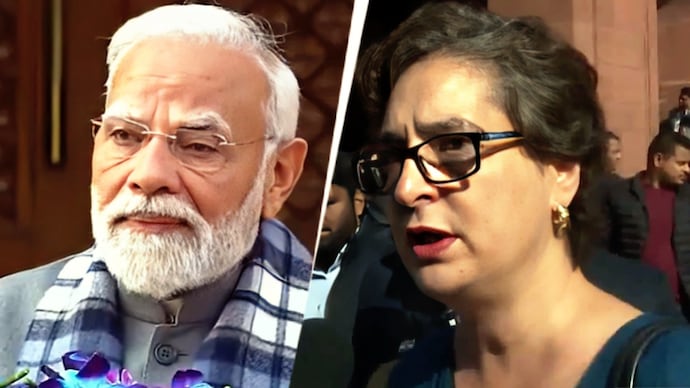
The disagreement triggered a larger national conversation about what Parliament is meant to be, what issues deserve attention, and how leaders should address public grievances. Here is a detailed look at what happened, why it matters, and how it reflects broader political and governance challenges in India.
What PM Modi Said
During a recent interaction, Prime Minister Narendra Modi remarked that Parliament should focus on “delivery, not drama.” He suggested that opposition parties often focus more on disruptions, theatrics, and shouting rather than participating constructively in debates or offering solutions.
This statement was part of a larger message urging all MPs to use the winter session productively. Modi stressed that the country expects Parliament to address important public issues effectively and efficiently. According to him, time should not be wasted on protests inside the House.
While the PM did not name any party directly, the remark was widely interpreted as being aimed at the Congress and other opposition groups that frequently accuse the government of avoiding discussions on sensitive topics.
FriesandExercise.com | fitofithealth.com | autoexposer.com
thenewsfreakers.co.uk | theparentingera.com
Priyanka Gandhi’s Sharp Response
Congress general secretary Priyanka Gandhi Vadra strongly disagreed with the Prime Minister’s statement. She argued that the issues the opposition raised—especially the Special Intensive Revision (SIR) of electoral rolls and Delhi’s alarming air pollution crisis—were serious matters affecting millions of Indians.
Her main points were:
1. Parliament Exists to Discuss Public Issues
Priyanka Gandhi said that raising concerns in Parliament is not “drama” but the basic responsibility of elected representatives. She pointed out that ignoring issues does not make them disappear.
2. Electoral Roll Revision Is a National Concern
The SIR of electoral rolls is a critical exercise determining voter lists. Congress has raised questions about alleged discrepancies and demanded transparency. According to Priyanka, discussing electoral reforms is essential for the health of India’s democracy.
3. Delhi Air Pollution Is a Public Health Emergency
With pollution levels in Delhi rising to hazardous levels every winter, Priyanka questioned why the government sees demands for action as drama. She emphasized that lakhs of citizens—especially children and the elderly—suffer due to toxic air.
4. Criticism Is Not Drama
Her statement implied that criticism of the government, even if uncomfortable, is part of a healthy democratic system and should be welcomed, not dismissed.
Why This Clash Matters
This exchange is not just about one comment. It reflects deeper political tensions and long-standing debates about parliamentary functioning.
1. Parliament Disruptions Have Become Common
Both ruling and opposition parties have a history of disrupting Parliament depending on who is in power. While the government accuses the opposition of unnecessary theatrics, the opposition says disruptions happen only when the government refuses to allow discussions.
This ongoing blame game leads to several sessions ending with very little productive work.
2. Critical Issues Often Go Undiscussed
Important topics like:
-
pollution
-
unemployment
-
price rise
-
electoral reforms
-
women’s safety
-
farmer issues
often do not get enough structured debate time in Parliament. Instead, sessions become dominated by procedural fights, walkouts, and political statements.
Priyanka Gandhi’s response highlights the opposition’s fear that important concerns are being brushed aside under the label of “drama.”
3. Role of the Opposition in Democracy
For any democracy to function effectively, the opposition must question, debate, and hold the government accountable. If every objection or concern is dismissed as theatrics, Parliament loses its purpose.
Priyanka Gandhi’s statement essentially reminded the government that questioning is not obstruction—it is duty.
Key Issues Raised by Congress
1. Special Intensive Revision (SIR) of Electoral Rolls
This is a process used by the Election Commission to update voter lists before elections. Congress claims:
-
names are being wrongly deleted
-
voters are being shifted without notification
-
discrepancies may affect fairness in upcoming elections
As elections are the foundation of democracy, these concerns are significant and deserve open debate.
2. Delhi’s Air Pollution Crisis
Every winter, Delhi’s air becomes almost unbreathable. Schools close, hospitals see more patients, and citizens struggle with hazardous air quality.
Opposition leaders argue that the government needs stronger policies on:
-
industrial pollution
-
construction dust
-
stubble burning
-
vehicle emissions
Calling for action on this is not “drama” but a demand for urgent public health protection.
Political Reactions Across Parties
The BJP dismissed Priyanka Gandhi’s criticism, saying that the Congress has a history of disrupting Parliament instead of contributing constructively.
Congress leaders, meanwhile, said the PM’s comments were disrespectful and an attempt to avoid answering tough questions.
Regional parties also reacted, saying Parliament must remain a space for strong debate, not controlled messaging.
Public Reaction
Among citizens, the debate received mixed reactions:
-
Some agree with PM Modi that Parliament needs discipline and productivity.
-
Others feel that concerns raised by the opposition are genuine and must not be dismissed.
-
Many believe political arguments are distracting from the real issues themselves.
Social media saw hashtags supporting both leaders, reflecting India’s polarized political environment.
A Larger Question: What Do Citizens Really Want?
Ultimately, people want Parliament to function smoothly, but not at the cost of ignoring critical issues. Citizens expect:
-
meaningful debates
-
accountability
-
transparency
-
real solutions
Whether it is electoral reform or air quality, these issues directly affect everyday life. People want leaders to discuss and act—not simply exchange strong statements.
Conclusion
The clash between PM Modi and Priyanka Gandhi is a reminder of the growing tension between the government and the opposition. While the Prime Minister emphasized productivity in Parliament, Priyanka Gandhi countered that raising serious issues is a basic democratic duty, not drama.
For Parliament to work effectively, both sides must engage responsibly: the government must allow open discussions, and the opposition must participate constructively. India’s challenges are too big to be solved through political sparring alone.
The nation hopes for debate, not dismissal—and solutions, not standoffs.