
After several weeks of political gridlock, both houses of the US Congress have finally passed a deal to reopen the government, officially ending what became the longest shutdown in US history. The news has sparked optimism in global financial markets, but for investors in gold and silver, the key question remains — how will this development impact precious metal prices in the coming days?
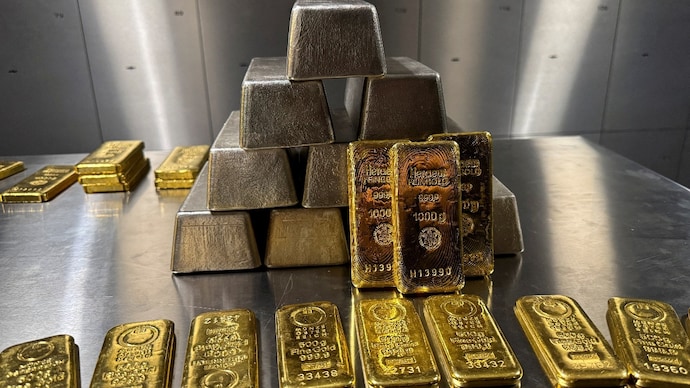
While equity markets are expected to cheer the resolution, the effect on safe-haven assets like gold and silver could be mixed. Analysts say the end of the shutdown will likely reduce uncertainty in the global economy, potentially lowering demand for gold as a safety asset, but the long-term outlook remains steady due to lingering economic and inflationary pressures.
Why the US Shutdown Matters for Gold and Silver
Precious metals such as gold and silver tend to move inversely to overall market sentiment. When global markets face instability — such as during a government shutdown, inflation scare, or geopolitical conflict — investors often move their funds into safe-haven assets like gold.
Now that the US government has reopened, market risk appetite is expected to return. Stock indices in Asia and Europe have already opened higher, and US futures point to further gains. As a result, gold prices may face mild downward pressure in the short term as investors shift back to equities.
However, experts caution that it may not be a simple “sell gold, buy stocks” reaction this time. The long shutdown has raised concerns about economic growth, consumer confidence, and fiscal management in the US — all of which could continue to support gold demand as a long-term hedge.
apnewsonline.in | corpdynamix.com | maganiva.com
drishtiyogattc.com | chicntrendies.com
Current Gold and Silver Prices
As of Thursday morning, domestic precious metal prices in India showed minor fluctuations:
-
Gold (24K) was trading around ₹71,200 per 10 grams.
-
Silver was at approximately ₹82,300 per kilogram.
In the international market:
-
Spot gold hovered near $2,385 per ounce, down about 0.3%.
-
Silver traded close to $28.50 per ounce, slightly lower but still supported by industrial demand.
These small declines reflect the immediate positive reaction to the US shutdown deal — a sign that investors are slowly moving out of safe havens and back into riskier assets.
Short-Term Reaction: Slight Cooling Expected
When uncertainty decreases, gold usually sees a short-term correction as investors reallocate funds. This could continue for a few sessions, depending on how strongly global markets rally.
In the near term, traders expect:
-
Gold prices may test the ₹70,800–₹71,000 support zone in India.
-
Silver could remain in the ₹81,000–₹82,500 range.
However, these corrections are unlikely to be deep or prolonged, as several supportive factors remain in play — including inflation concerns, high interest rates, and ongoing geopolitical risks.
Why Gold Could Stay Strong in the Long Run
Despite the immediate cooling effect, analysts believe gold remains in a long-term uptrend. The end of the US shutdown does not eliminate deeper structural problems in the economy.
Here’s why gold may still shine in the coming months:
-
US Debt and Fiscal Pressure
The shutdown highlighted the growing political divide and fiscal weakness in the US government. Even though the government is reopening, debt ceiling concerns and budget imbalances persist — factors that often drive investors back to gold. -
Inflation and Interest Rates
Inflation in the US and Europe remains above central bank targets. Although the Federal Reserve has hinted at a possible pause in rate hikes, it has not signaled cuts yet. If inflation stays sticky, gold could remain attractive as an inflation hedge. -
Central Bank Buying
Many countries, including China and India, have continued to accumulate gold reserves to diversify away from the US dollar. This steady central bank demand provides a strong floor for gold prices. -
Geopolitical Tensions
Even as the US shutdown ends, global tensions — from conflicts in Eastern Europe to Middle East instability — remain unresolved. These factors typically sustain safe-haven interest in gold and silver.
Silver: Balancing Dual Roles
Silver behaves differently from gold because it plays a dual role — as both a precious and industrial metal. While it benefits from safe-haven demand, it also reacts to trends in manufacturing, electronics, and solar energy.
With the US economy reopening, industrial activity is expected to pick up, which could support silver prices. In the medium term, analysts predict that silver may outperform gold due to strong industrial demand and limited supply growth.
Silver’s growing use in electric vehicles, renewable energy systems, and 5G technologies continues to boost its long-term prospects.
Analysts’ Views
Market experts believe that while gold and silver may see mild corrections, they are unlikely to witness a sharp fall.
-
Ravindra Rao, Head of Commodity Research at Kotak Securities, noted:
“The end of the US shutdown is a relief for global markets, but it doesn’t erase economic uncertainty. Gold will remain supported around $2,350 levels as investors still seek safety amid global inflation concerns.” -
Ajay Kedia, Director at Kedia Commodities, said:
“Silver’s industrial side could see stronger recovery if the US economy picks up speed again. However, short-term fluctuations will depend on the US dollar index and treasury yields.”
Impact on the US Dollar and Yields
The US dollar index (DXY) strengthened slightly after the shutdown deal, rising above 105. A stronger dollar often puts pressure on gold prices, as it makes the metal more expensive for non-US buyers.
Meanwhile, US Treasury yields have edged higher as bond markets expect more fiscal spending following the reopening. Rising yields tend to weigh on non-yielding assets like gold.
However, the overall sentiment remains cautious. If the upcoming US inflation and employment data show weakness, both the dollar and yields could ease again — potentially providing fresh support for gold.
What Indian Investors Should Do
For Indian investors, gold remains an important part of a balanced portfolio. Experts recommend:
-
Holding gold for the long term, preferably through sovereign gold bonds (SGBs) or exchange-traded funds (ETFs).
-
Avoiding panic selling during small corrections.
-
Accumulating on dips below ₹71,000 levels, given the broader uptrend.
Silver investors may consider small allocations through ETFs or bars, but they should be prepared for higher volatility due to its industrial exposure.
Outlook for the Coming Weeks
In the near term, gold prices may consolidate between ₹70,800 and ₹71,800, while silver could hover between ₹81,000 and ₹83,000.
If the dollar strengthens further, minor pressure may persist, but any renewed geopolitical tension or weak US data could quickly reverse the trend.
In essence, while the end of the US shutdown might reduce panic-driven buying, gold and silver’s long-term fundamentals remain strong.
Conclusion
The reopening of the US government marks the end of weeks of political uncertainty and brings short-term cheer to global markets. But for precious metals, the story is more nuanced.
Gold and silver may cool slightly as investors move back into risk assets, but persistent inflation, geopolitical tensions, and fiscal challenges continue to make them attractive hedges.
For now, experts suggest staying calm during price dips and focusing on the long-term value of precious metals in a diversified portfolio.
