For decades, a faculty position at Delhi University has been considered one of the most prestigious academic jobs in the country—stable, respected, and intellectually fulfilling. But behind the reputation of DU as a premier public institution lies a quieter, more troubling narrative whispered in staff rooms, coaching centres, and interview waiting halls. It is a narrative of alleged “informal payments,” unspoken expectations, and a shadow market that some say has begun to distort the fairness of the recruitment process.
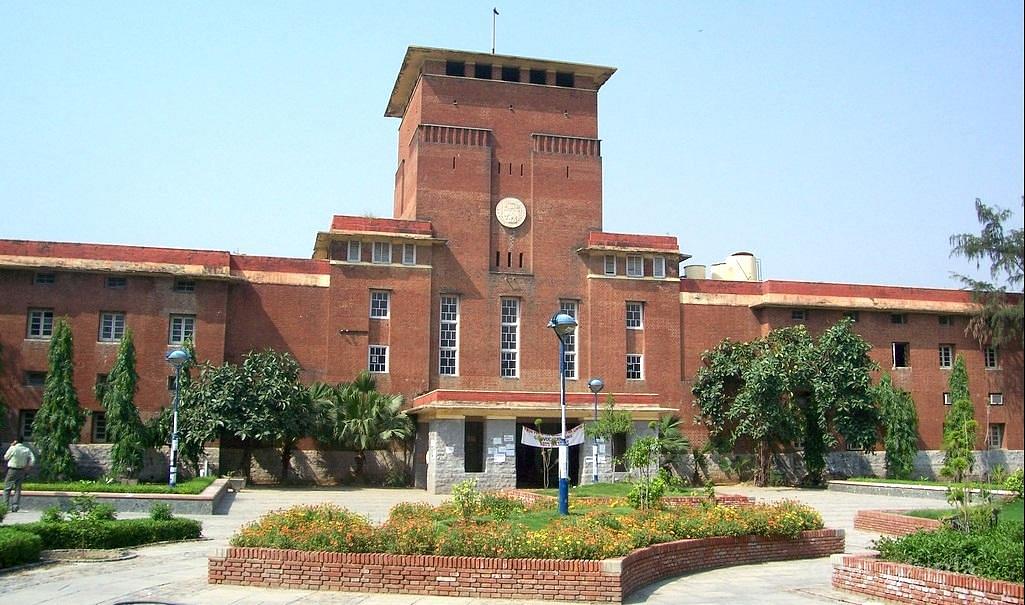
In recent months, murmurs have grown louder, with many young scholars and candidates hinting that they faced pressure—direct or indirect—to pay lakhs of rupees for a chance at securing a teaching post. While no formal complaints exist due to the absence of hard proof, the consistency in these stories raises uncomfortable questions about how hiring decisions are made in one of India’s most respected universities.
jwmcollection.com | lasandino.com | juststartblog.com
amherstdelivery.com | thewhipp.com
A Crisis Without Paperwork—Only Murmurs
Unlike traditional corruption scandals, where financial trails, documents, or sting operations provide evidence, the allegations around DU hiring appear to operate in an informal, intangible zone. Candidates who have shared their experiences almost always say the same thing:
There is no written demand. No proof. No straightforward message. Only hints, suggestions, or recommendations passed through “contacts,” insiders, and intermediaries.
Several applicants recount how conversations begin innocently—someone introduces a “helpful” senior, a known faculty member, a former administrator, or even a middleman connected to a department. At first, it may seem like casual career guidance. But eventually, the conversation shifts toward what insiders describe as the “going rate.”
And that rate, some allege, can go up to ₹40–50 lakh for an Assistant Professor position in highly sought-after departments.
Because DU is decentralised—each college hires independently—the recruitment landscape is fragmented. This creates multiple layers of influence, where governing body members, political student groups, college managements, and senior faculty may all hold unofficial power. It is this decentralisation, some argue, that creates room for manipulation.
Young Scholars Caught in a Trap
The allegations hit young academics the hardest. Many aspirants spend years pursuing PhDs, cracking NET/JRF, publishing papers, and working on contractual or ad-hoc positions, often juggling unstable incomes and intense workloads. For them, a permanent job is not just employment—it is financial stability and social legitimacy.
But when these scholars reach the interview stage, many feel the odds are already stacked against them.
“You walk into the room knowing someone else may have already paid for that seat,” one candidate says.
Others narrate experiences where interviewers seemed disinterested, rushed, or overly friendly with certain candidates. Some allege that decisions appeared predetermined, with marks awarded in interviews bearing little relationship to academic performance.
These experiences have created a climate of frustration, anxiety, and helplessness among early-career academics. Many are unwilling to speak publicly, fearing they may be blacklisted from future recruitment cycles.
Why No One Files a Complaint
The absence of formal complaints is often used as evidence that corruption does not exist. But the reality is far more complex.
1. No Tangible Proof
Payments—if they happen—are not made through traceable channels. They involve trusted intermediaries and operate entirely in the shadows.
2. Fear of Retaliation
Candidates who protest risk being quietly excluded from future shortlists.
3. Institutional Power Structures
College chairs, management committees, and senior faculty involved in hiring hold strong influence over academic careers.
4. Doubt and Self-Blame
In many cases, candidates question themselves:
Was I rejected because I lacked merit, or because I didn’t pay?
This psychological uncertainty prevents people from speaking out.
The Rising Pressure of Ad-hoc Culture
DU’s large ad-hoc workforce—which often works for years without job security—creates another layer of vulnerability. Ad-hoc teachers fear losing their existing contracts if they challenge irregularities.
Many ad-hoc faculty believe that permanent positions are sometimes used as bargaining tools—unofficially rewarding loyalty, internal networks, or personal connections.
In such an atmosphere, rumours about payments find fertile ground.
What Fuels the Alleged “Shadow Market”?
1. High Demand, Limited Seats
Thousands of scholars compete for a handful of posts, especially in popular departments such as English, Political Science, History, and Commerce.
2. Political Influence in Institutions
Several DU colleges have management bodies aligned with political organisations, giving rise to perceptions of bias or manipulation.
3. Lack of Transparent Interview Evaluation
Interviews often account for a significant percentage of marks, but scoring criteria and justification for scores are rarely disclosed.
4. Informal Power Networks
Retired principals, senior professors, and private consultants sometimes act as “guides” to candidates—opening the door to intermediaries.
The Human Cost
Beyond the numbers and rumours, the human impact of such allegations is enormous.
-
Scholars who cannot afford bribes feel locked out of the system.
-
Meritorious candidates worry that hard work alone is not enough.
-
Entire departments risk being shaped by influence rather than academic excellence.
-
Students ultimately pay the price if teaching quality deteriorates.
The emotional toll is heavy—disillusionment, burnout, and insecurity are common among aspirants.
Why the Silence Persists
While the issue is widely discussed in private circles, very few take their concerns public. The reasons are simple:
-
Fear of institutional backlash
-
Lack of trust in complaint mechanisms
-
Absence of documentary evidence
-
Worry about being labelled a troublemaker
This silence allows the system—if flawed—to continue unchecked.
What Can Change the System?
1. Transparent Interview Scores
Mark sheets should be published publicly to show how candidates were evaluated.
2. Centralised Hiring Instead of College-by-College Interviews
A unified system could reduce manipulation.
3. External Independent Observers
Observers from outside DU could ensure fairness.
4. Whistleblower Protections
Reporting corruption should not destroy careers.
5. Clear Digital Audit Trails
Automated systems for evaluation could reduce human discretion.
Some DU colleges have already begun adopting more transparent practices, but the pace of reform remains slow.
Conclusion: The danger of whispering truths
The Delhi University recruitment scandal – if real – can in no way be proved by additional records or audio recordings. But the chorus of quiet accusations tells its own story: A system where profits are now and again hidden with the help of money influence, fraud and rumors.
This crisis is no longer manufactured on paper, but in murmurs – and public murmurs – indicating a profound rot of thought at one of India’s most prestigious educational institutions.
For a meaningful alternative, the silence must be broken – not by using angry accusations, but by strengthening transparency, equality and accountability within recruitment patterns. Only then can DU regain its recognition as a field where talent, no longer behavior, shapes the future of education.
jwmcollection.com jwmcollection.com jwmcollection.com jwmcollection.com jwmcollection.com jwmcollection.com jwmcollection.com jwmcollection.com jwmcollection.com jwmcollection.com jwmcollection.com jwmcollection.com jwmcollection.com jwmcollection.com jwmcollection.com jwmcollection.com jwmcollection.com jwmcollection.com jwmcollection.com jwmcollection.com jwmcollection.com jwmcollection.com jwmcollection.com jwmcollection.com jwmcollection.com jwmcollection.com jwmcollection.com jwmcollection.com jwmcollection.com jwmcollection.com jwmcollection.com jwmcollection.com jwmcollection.com jwmcollection.com jwmcollection.com jwmcollection.com jwmcollection.com jwmcollection.com jwmcollection.com jwmcollection.com jwmcollection.com jwmcollection.com jwmcollection.com jwmcollection.com jwmcollection.com jwmcollection.com jwmcollection.com jwmcollection.com jwmcollection.com jwmcollection.com jwmcollection.com jwmcollection.com jwmcollection.com jwmcollection.com jwmcollection.com jwmcollection.com jwmcollection.com jwmcollection.com jwmcollection.com jwmcollection.com jwmcollection.com jwmcollection.com jwmcollection.com jwmcollection.com jwmcollection.com jwmcollection.com jwmcollection.com jwmcollection.com jwmcollection.com jwmcollection.com jwmcollection.com jwmcollection.com jwmcollection.com jwmcollection.com jwmcollection.com jwmcollection.com jwmcollection.com jwmcollection.com jwmcollection.com jwmcollection.com jwmcollection.com jwmcollection.com jwmcollection.com jwmcollection.com jwmcollection.com jwmcollection.com jwmcollection.com jwmcollection.com jwmcollection.com jwmcollection.com jwmcollection.com jwmcollection.com jwmcollection.com jwmcollection.com jwmcollection.com jwmcollection.com jwmcollection.com jwmcollection.com jwmcollection.com jwmcollection.com jwmcollection.com jwmcollection.com jwmcollection.com jwmcollection.com jwmcollection.com jwmcollection.com jwmcollection.com jwmcollection.com jwmcollection.com jwmcollection.com jwmcollection.com jwmcollection.com jwmcollection.com jwmcollection.com jwmcollection.com jwmcollection.com jwmcollection.com jwmcollection.com jwmcollection.com jwmcollection.com jwmcollection.com jwmcollection.com jwmcollection.com jwmcollection.com jwmcollection.com jwmcollection.com jwmcollection.com jwmcollection.com jwmcollection.com jwmcollection.com jwmcollection.com jwmcollection.com jwmcollection.com jwmcollection.com jwmcollection.com jwmcollection.com jwmcollection.com jwmcollection.com jwmcollection.com jwmcollection.com jwmcollection.com jwmcollection.com jwmcollection.com jwmcollection.com jwmcollection.com jwmcollection.com jwmcollection.com jwmcollection.com jwmcollection.com jwmcollection.com jwmcollection.com jwmcollection.com jwmcollection.com jwmcollection.com jwmcollection.com jwmcollection.com jwmcollection.com jwmcollection.com jwmcollection.com jwmcollection.com jwmcollection.com jwmcollection.com jwmcollection.com jwmcollection.com jwmcollection.com jwmcollection.com jwmcollection.com